09 October, 2015

Syria: A New Afghanistan?


Surely by no coincidence, fighting in eastern Ukraine has temporarily abated just as Russia has made significant military moves in the Middle East. On September 30, Russia carried out its first military airstrikes in Syria, launched from a newly established airbase in Latakia. The Russian military announced its jets conducted 20 flights and successfully destroyed eight targets belonging to the Islamic State in Iraq and Syria (ISIS) near the Syrian city of Homs. It was widely reported, however, that the targets were opposition groups unrelated to ISIS. In a way reminiscent of the 1979-1989 Soviet-Afghan War, Moscow’s decision to send troops into Syria, and its criticism of the West for supporting so-called terrorist groups in the battlefield, underscores deep-seated differences between Russia and the United States and opens up a new front in the burgeoning rivalry between the former Cold War adversaries.

Washington has vociferously aired its concerns about Moscow’s heightened involvement in the Syrian fighting. U.S. Secretary of Defence Ashton Carter condemned the airstrikes as “tantamount to pouring gasoline on fire” in Syria, and stressed that “fighting [ISIS] without pursuing parallel political transition only risks escalating the civil war in Syria.” Concern has also been raised that Russia’s military buildup in Syria could lead to an unintentional confrontation with American warplanes operating against ISIS in the country.

In his recent speech to the UN General Assembly, Russian President Vladimir Putin stressed that he aimed only to combat ISIS and criticized the international community for not doing enough to counter this threat. Parting sharply from the West’s insistence that Syrian President Bashar al-Assad cannot be part of a long-term political resolution, he declared, “We think it is an enormous mistake to refuse to cooperate with the Syrian government and its armed forces, who are valiantly fighting terrorism face to face.”

By contrast, President Obama, in his own speech to the UN General Assembly, acknowledged the importance of military action against ISIS, but held the Assad regime responsible for initiating the conflict by killing unarmed protesters. “Lasting stability can only take hold when the people of Syria forge an agreement to live together peacefully,” he said, “and realism…requires a managed transition away from Assad and to a new leader.”

The Russian and American agendas in Syria are at loggerheads. One sees the solution in backing Assad, while the other sees Assad as the root of the problem. If this is not enough, there is yet another degree of difference, one that pertains to the level to which each side identifies complexity in the situation. To Obama, there “are no easy answers to Syria,” but to Putin, there is a simple answer to why he pushed his forces into the fray: Assad is a legitimate leader fighting Islamist militias backed by Western powers delusional enough to think there is such thing as a democratic revolution.

As the Russian president said at the UN, “everyone just keeps repeating [others’ mistakes], and so the export of revolutions, this time of so-called democratic ones, continues.” Whether it is in Georgia, Ukraine or now in Syria, Russia opposes Western attempts to export democracy and will always stand against the “brazen destruction of national institutions.”

The situation in Syria bears striking resemblance to Soviet-invaded Afghanistan. Aside from parallel death tolls and refugee estimates, Moscow entered Afghanistan just as its ally, the communist People’s Democratic Party of Afghanistan (PDPA), was cracking up under the armed opposition’s attacks. In the same vein, the Assad regime had lost control over most of Syria to various rebel groups before calling for increased assistance from the Kremlin.

Additionally, Russia happens to face the same enemy in both wars. On the one hand, the enemy on the battleground is Islamist militias. Russia fought the Mujahedeen in Afghanistan and is now chasing after a diverse mix of rebels whom it claims are all extremists. On the other hand, these armed groups relied on U.S. largesse. In Afghanistan, the U.S. gave substantial financial and military support to the Mujahedeen militias in their struggle against Soviet forces. In Syria, although Washington has acknowledged the presence of some extremist groups among the rebels fighting Assad, it has dubbed others “moderate” and given them materiel aid.

The resemblance between the two wars could lead to similar consequences. In Afghanistan, Moscow’s intervention only exacerbated the conflict. For an entire decade, the Mujahedeen used the Soviet invasion to rally thousands of fellow Muslims to their cause and exploited the Soviet-American rivalry to tap into unprecedented flows of Western funding.

Today in Syria, Moscow’s armed intervention may do ISIS a similar service, by stirring Sunni outrage and enabling the group to attract even more recruits. Putin keeps blaming the West for repeating past mistakes, while his country is doing just the same.

22 January, 2015

Greek Voters to Decide Future of Eurozone Crisis on Sunday

[Link to original article]


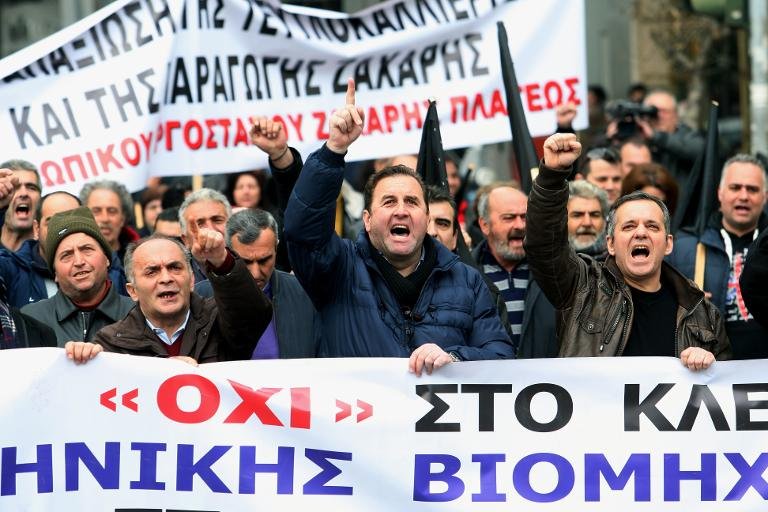
Workers in Greece protesting austerity measures and the closure of three factories

Days remain until the 2015 legislative election in Greece, when 300 new MPs are expected to take their seats in the Hellenic Parliament. The election, scheduled on Sunday, January 25, is not only important for Greece, a country that has been spinning its wheels in a financial quagmire since 2012, but to the entire international community, and in particular the European Union.

This year’s election is set to be held earlier than usual, and in a political atmosphere more tumultuous than typically anticipated. On December 29, 2014 the centre-Right majority party New Democracy (known by the acronym ND) failed to pass a presidential candidate after three rounds of voting. According to the Greek constitution legislative elections must take place before a new executive election can begin. NDis very unlikely to remain in power after the new election, and ND members know it.

Antonis Samaras, prime minister of Greece and leader ofND, described the new election as ‘catastrophic for Greece.’ On December 8, 2014, the parliament passed the budget plan for next year with the approval of 155 votes out of 300. Although the plan promised to cut taxes and foster economic growth, taxpayers deemed it insufficient and a wave of public demonstrations ensued all over the country. Greeks protested EU-backed national austerity measures, which had been implemented as a pre-condition for IMF and ECB bailouts.

ND, however, believes its austerity plan has been successful. Last year the Greek economy ran a budget surplus for the first time since 2012 and is expected to return to growth in 2015. Furthermore, in September 2014, the Greek Finance Minister declared that public debt would drop 65 percentage points by 2022 from a value of 175 percent of total GDP to 110 percent.

But the electorate appears to be of a different opinion. Most Greeks deem the price they have paid for the bailout to be exorbitant, and with an unemployment rate of 26%, a youth unemployment rate of 50%, mass public and private sector layoffs, and punitive cuts on subsidies and services, it is difficult to convince them otherwise.

In a pool of discontent, one swimmer looks to be making headway – he is Alexis Tsipras, and he is the leader of the hard-Left Syriza party. Opinion polls in the last two months have unanimously put Syriza miles ahead of its competitor, ND. The latest survey by the Greek newspaper To Vima reveals that Syriza maintains a 4 point lead over ND this week, one point more than last week. Unless something of an earthquake magnitude hits the electoral scene, Syriza is set to win the election on Sunday, and Tsipras will become Greece’s prime minister.

Alexis Tsipras among his party’s supporters during a pre-election rally at the Palais des Sports stadium in Thessaloniki


This is not a minor turn in the country’s stewardship.Syriza and ND have different visions and contradictory views on the debt crisis. Although Tsipras maintains that he wants Greece to stay in the Eurozone and that his government will respect Greece’s obligations as a Eurozone member, he has criticized EU creditors and compared EU-mandated restructuring to ‘fiscal waterboarding’ in Germany’sHandelsblatt newspaper.

The 40-year-old populist appealed to the agonized masses with promises to relieve austerity and to demand that EU moneylenders write off the remaining debt. Tsipras seems to want it all: continued Eurozone membership, less austerity and less debt.

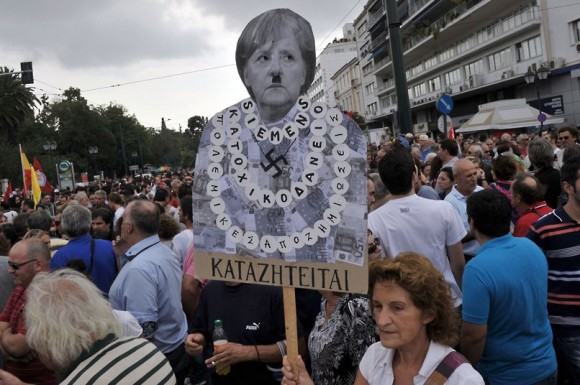
Angela Merkel portrayed as Hitler in Greek demonstrations


While Syriza’s supporters march in Athens carrying angry placards against the European Union and painting walls with left-wing graffiti, Germany, Finland and the IMF have publicly warned the EU against writing off Greece’s debt. German Chancellor Angela Merkel reiterated the desire for a Greek exit from the Eurozone, an idea that has been gaining momentum and known widely as Grexit(Greece Euro exit).

The dilemma here is that both Syriza and EU moneylenders really know how to hit where it hurts, but would end up hurting themselves in the process. If Syriza wins, it will have to increase public spending and reduce austerity measures if it is to fulfill its election promises, a move which would run counter to the pre-conditions of the EU mandated bailout. However, EU moneylenders are the only powers keeping Greek banks afloat and Greece’s only hope if it is to balance its budget.

On the other hand, if Syriza caused Greece to be expelled from the Eurozone and revert to the drachma, the national currency, the bonds with which the EU banks have bought Greece’s debt would be in a much less valuable currency, and the EU is aware of that.

The EU is also aware that the Greek case is not unique. Since the onset of the European debt crisis in 2009 many Eurozone countries have descended into debt and been bailed out. In some of these countries left-wing parties are noticeably on the rise. A recent poll in Spain has indicated that the left-wing party Podemos is in the lead to win the December 2015 general election. If Greece were to negotiate some form of write-off for its debt, or if it were to leave the Eurozone altogether, it is safe to say that other countries will follow.

A new chapter in the history of the European debt crisis will be written on Sunday. It is up to the Greek electorate to decide who will pen the first sentence.

08 January, 2015

Syrian Refugees in Jordan: Loss of Free Healthcare and Recurrent Deportations


[Link to original article]

Jordan’s recent repeal of its free healthcare to Syrian refugees came as no surprise. Since the beginning of the Syrian Civil War in 2011, Jordan has become home to hundreds of thousands of Syrians refugees. The United Nations High Commissioner for Refugees (UNHCR) records 620,000 Syrian refugee in Jordan, but Jordanian authorities maintain the actual number is more than double that.


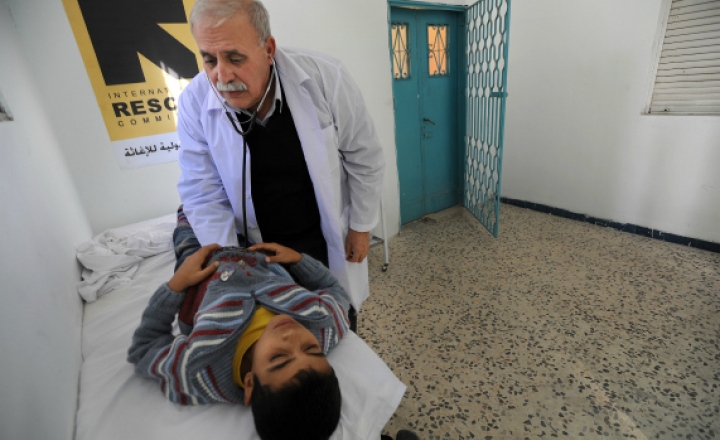
Healthcare services provided to Syrians have overburdened the Ministry’s capacity to maintain the same quality of service it used to provide for Jordanians. A perfect example is the Mafraq Government Hospital, the health facility nearest to the Zaatari Syrian refugee camp. In July 2013, only two neonatal incubators were available to Jordanians, while Syrians occupied 12. In 2011, 134 Syrian patients were being treated for cancer in Jordanian health facilities. In 2012, the number rose to 188 patients. In 2013, the net number was 230. In January 2013, 105 surgical operations were conducted on Syrian subjects, which rose to 622 operations in March. This compelled the government to increase its health expenditure by $135 million since last year to cope with the increased demand on services, with another $180 to upgrade ten health facilities in the north. The Ministry of Health has frequently blamed the United Nations and the international community for not providing enough aid. Last year, the Ministry spent $53 million on the healthcare provided to Syrian refugees, only $5 million of which was a direct contribution by the United Nations.


Although the health sector has been the one most affected by Syrian refugees, other sectors are also suffering. Jordanian schools are overloaded. Nearly 80 schools in the north governorates have introduced an extra session per day to assimilate the large number of Syrian children enrolled in their classrooms. Jordan has also to deal with other 55,000 children not registered in any school yet who live in the refugee camps. Parents of Jordanian children have complained about the decline in the educational services. Despite the support by the UN, which amounts to $5 million, many schools have had to cut class hours in order to serve two sessions per day.

These burdens compelled the government to take a $2 billion loan from the International Monetary Fund (IMF) in 2012 to boost its economy. However, experts question the economy’s ability to rise beyond the IMF planned 3-3.5 percent growth target in the coming years, especially with a budget deficit of about 9 percent of GDP and a staggering $2.5 billion Jordan has to pay annually for fuel.


As the kingdom flounders in a sea of Syrian refugees, it is no wonder forced deportations have already found their way to the headlines. On December 3, 2014, Jordan deported nine Syrian healthcare workers. Earlier on September 16, the government had done the same with a group of 12 Syrian refugees receiving treatment in the unlicensed Dar al-Karama rehabilitation center in the northern city of al-Ramtha. These arrests and deportations run roughshod over the customary international law ofnon-refoulement, which prevents Jordan from deporting refugees.

Faced with shrinking privileges and deportations, the future does not bode well for Syrian refugees.

06 June, 2012

Writing in English as a Second Language: Pros and Cons

Let’s start with the cons.

First of all, I want to be clear: you’ll never be able to express yourself as clearly or as elastically as in your mother language. If you are an innate bilingual, it’s okay. But if you are someone who has never been not even for a day to an English-speaking country, someone who gets his daily bread of words through books and media, then beware: everything — and I mean everything! Every action you take, every memory you collect, every banter and filthy joke you tell — that happens in your environment's language takes its heavy toll on your fluidity and creativity in English. Memories do have a lingual code, whatever some people may try to persuade you otherwise. And no, you can’t achieve just anything. Conrad and Nabokov? Please reconsider. First, Conrad had known French before he was introduced to English, and those are very close terrains. About 60 percent of all English words are of French origin, and that is saying much. Second, Conrad immigrated from his home country at a relatively young age (16); worked aboard some French vessels before he joined the British Navy when he was about 24. Old? How old are you? And needless to say Conrad lived sealife; he mingled with the right models for his characters; heard them cuss and curse; had conversations with them that he recorded; he even married an Englishwoman — things that you are, very probably, never going to do. As for Nabokov, he studied at Cambridge, for God’s sake! Moreover, he spoke three languages at his parents' house, shifting from Russian to French, French to English and English to Russian on daily basis. Did you speak English as a second, third or fourth language when you were little at your parents' house? If the answer is yes, then excuse me, sir. But if not, think again about the quest you want to pursue. Last thing about Nabokov is that he lived the greater part of his life in the United States, and did not even consider writing in English until he was old enough for you to drop the subject altogether and master Chinese.

Second of all, you’ll make of yourself an outcast inside your own community. Very few countries I know of encourage their intelligentsia to direct their pens (keyboards now, I guess) to foreign readerships. Even though you become a luminary in the field, even if you turn out to be a real genius, they will bestow you with little to no appreciation at all. Or it could be worse, if they try to pull your leg to their boisterous, feisty and very busy literary life. Once you decline or show the first hint of lack of interest, it's war! You'll wish you have never made that ignoble mistake and written a word in the first place.

Third, who told you that writing in English is such a cinch anyway? Do you have any idea how even native English writers strive and strain to compose one original sentence that can possibly stand out against all that collage of seemingly ad-infinitum literary produce? What do you know about English clichés, cultural references and catchphrases? Have you mastered English collocations and connotations? Do you dream in English, sir? Do you think in English or are you just interpreting from another language with the delusion of parallel words?... I’m not saying it’s impossible, but at least don’t fool yourself into believing it's a piece of cake or even within close reach. To clarify, imagine how many years a foreigner from a faraway land would take to master your mother tongue.

Fourth, even if you managed to transcend all the lingual and cultural barriers and eventually wrote a good manuscript in English, how are you going to publish it? Do you have connections in the publishing world? Do you know there are so many talented English-speaking writers that remain to this day unpublished? Things may be a bit better than in your third-world country regarding publishing and reading in general, but not all the time. Sometimes the dearth of talent in a given place plays into the hands of the privileged few. You might not sell a lot of books, but at least you will be published and recognized. Remember, for many writers, that is more than enough. But again, not adding up to the compendium of human achievements, not contributing to a civilization you honestly believe in, not be translated and read by the biggest body of readers worldwide, not be written in history if you will, all that makes the poor writers who write in their native languages furious. You'll notice them. They speak in tongues on national televisions worldwide about nothing else but Western hegemony and decadence and why they haven't been translated yet.

Why bother, then? Too many impediments and drawbacks, huh? Wait, don't be a hothead. There are still amazing advantages to writing in English.

Here are some pros to writing in English.

First and foremost, all human knowledge — past, present and foreseeable future — is available in English. If you want to read Voltaire, you’ll find his books in English. If you want to read the fables of Aesop, you will find a good English translation. If you want to read your most renowned native authors, you’ll find them in English as well. As for science, the best references are almost always written in English. If you read in English, you'll know more than all of your national intellectuals — those who only read translations — combined.

Second, if you’re a fiction writer, some genres are exclusive to the Anglophone Culture: science Fiction (to a lesser extent fantasy), thrillers, detective novels, and more or less comics (save for in France and Japan). Even if you decided to write these genres in your native language, where else would you learn the ropes? Who could possibly teach you the craft but the Anglophone writers — who, in many cases, are also the founders? Can you be a good sci-fi writer without reading Gibson, Sterling, Ursula Le Guin or Kim Stanley Robinson? Can you start writing comics before you read Watchmen, V for Vendetta, Sin City ... etc? Can you write detective novels without getting to know Philip Marlowe first? Think about it. Now, if you’re going to get most of your readings in one language, how far will you write in another before you lose touch with words?

Third, better lingual resources and whatnot. That was the first thing that drew me to the English language. Thousands of dictionaries, corpora, grammar books, writing guidelines and other helpful sites are out there just to make you a better writer. Even other major European languages, like French and German, cannot compete with that.

Fourth, vast and infinite readership. The Anglophone book market is the biggest in the world, and you’ll be read by readers from all sorts of backgrounds. It’s a writer’s dream of a lifetime, isn't it?

Last but not least, tapping into the global network of professionals. Being fluent in English not only helps you be read by a wider readership, but also be in contact with writers from all around the world. You'll be able to attend conferences, exchange signed copies and ask for guidance and direction. You'll have a better shot at that than if you continue writing in your native tongue that nobody outside your country can read and is little translated if ever.

Those were the pros and cons to writing in English as a second language. My only advice is that you take your decision very early on and stick to it as long as it works.